Complete guide
The drum throne guide
The drum throne is the single piece of hardware your body actually touches for every minute you play — 8,000 hours of practice and 500 gigs over a lifetime. Pick wrong and you'll be the drummer with the recurring lower-back problem in five years. Pick right and the throne becomes invisible, which is the highest compliment you can pay any piece of drum gear.

The basics
What is a drum throne?
A drum throne is a height-adjustable seat engineered specifically for drummers. It has three components that distinguish it from any generic stool: a heavy-duty tripod base wide enough to stay stable under aggressive kick-pedal work, a height-adjustment mechanism that holds position over years of use, and a padded top with foam density and shape selected for multi-hour ergonomics. Get any one of those wrong and the seat becomes unusable for serious drumming within a few years.
The word “throne” is industry-standard, not marketing language. It’s the term every major hardware manufacturer (DW, Tama, Pearl, Yamaha, Roc-N-Soc) uses on the product page and in the drum-shop catalogue. In UK and European drumming circles “drum stool” is the more common name; the products are interchangeable.
The category
Round, saddle, motorcycle — which throne shape fits your body
Drum thrones split into two main top shapes and two main height-adjustment systems. Most working drummers own one or two thrones across these axes; pros often own one of each shape for different playing contexts.
- Round-top thrones — the classic shape. A circular padded top, usually 12–14″ in diameter. Distributes body weight evenly across the sit-bones and is comfortable for the longest sessions. Best for: rock, pop, jazz, anything where you sit upright and play traditional kit. Examples: DW 9100M, Tama HT741B.
- Saddle (motorcycle-style) seats — a contoured shape with a narrower front and a wider back, often called a “motorcycle” or “tractor” seat. Splits weight between the sit-bones and aligns the hips for better leg movement. Best for: double-pedal players, drummers with hip mobility issues, gospel and prog where the legs work hard. Example: Roc-N-Soc Nitro.
- Bicycle / cycle seats — narrow racing-bicycle-shaped seats favoured by some session drummers. Quick to mount and dismount; stays out of the way of the kick pedal. Niche; not usually a first throne.
- Hydraulic / gas-shock height adjustment — you twist the seat and the gas shock raises or lowers the throne in seconds. Smooth and fast; adds a wear component that can fail after 5–10 years of heavy use. Roc-N-Soc Nitro is the standard.
- Threaded / pin-stop adjustment — the seat post is threaded or stop-pinned to the base. Slower to adjust but mechanically simpler and bombproof for decades. DW 9100M and Tama HT741B both use stop-pin systems.
Free interactive tool
Drum Throne Height Calculator
Plug in your height and inseam — we’ll output your recommended throne height range and highlight which throne in the buyer’s guide below fits it.
About you
Your recommended height
21″ – 23″
(53 – 58 cm)
Your recommended throne height places your hips slightly higher than your knees, the most common posture for double-pedal players.
Results highlight matching products in the comparison table below.
Our three picks
The shortlist, if you’re in a hurry
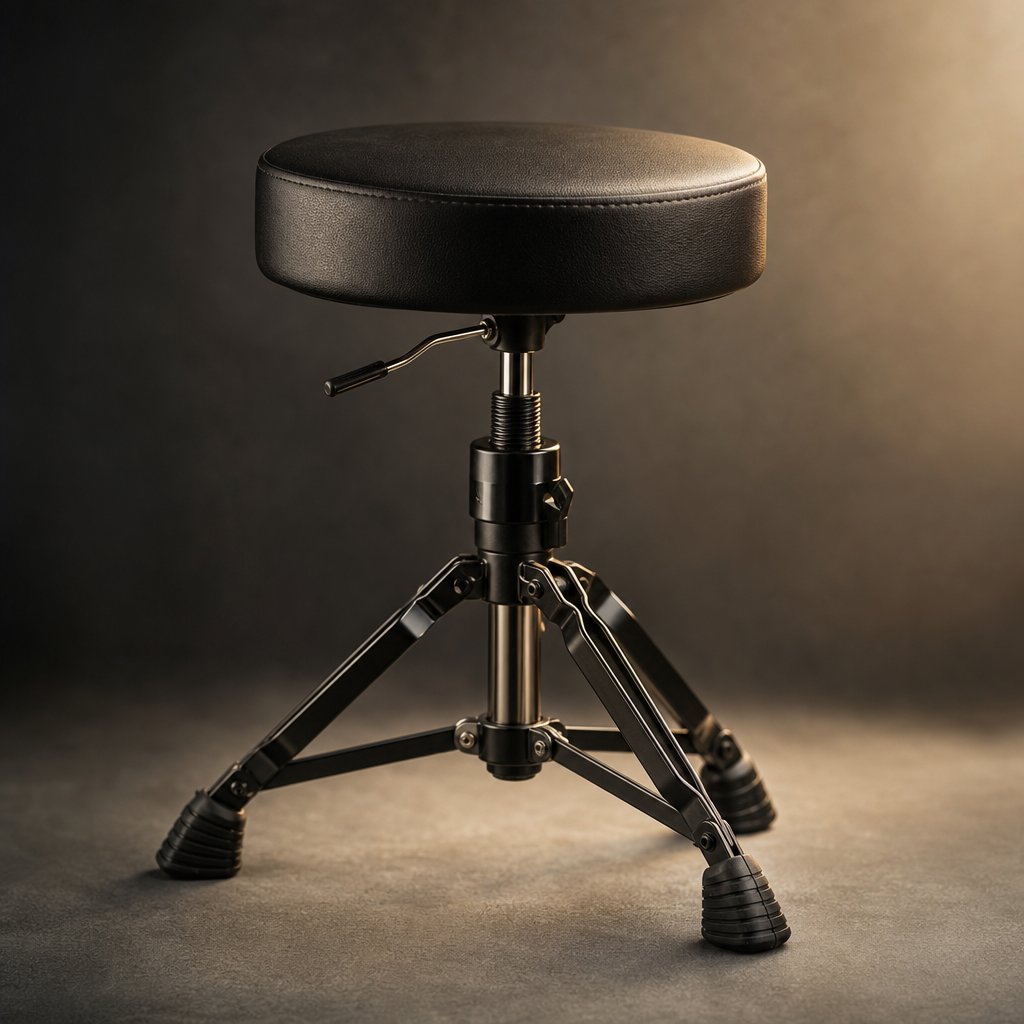
Drum Workshop
DW 9100M Round Top
Lifetime throne. Stable, comfortable, road-tested by every major DW endorser.
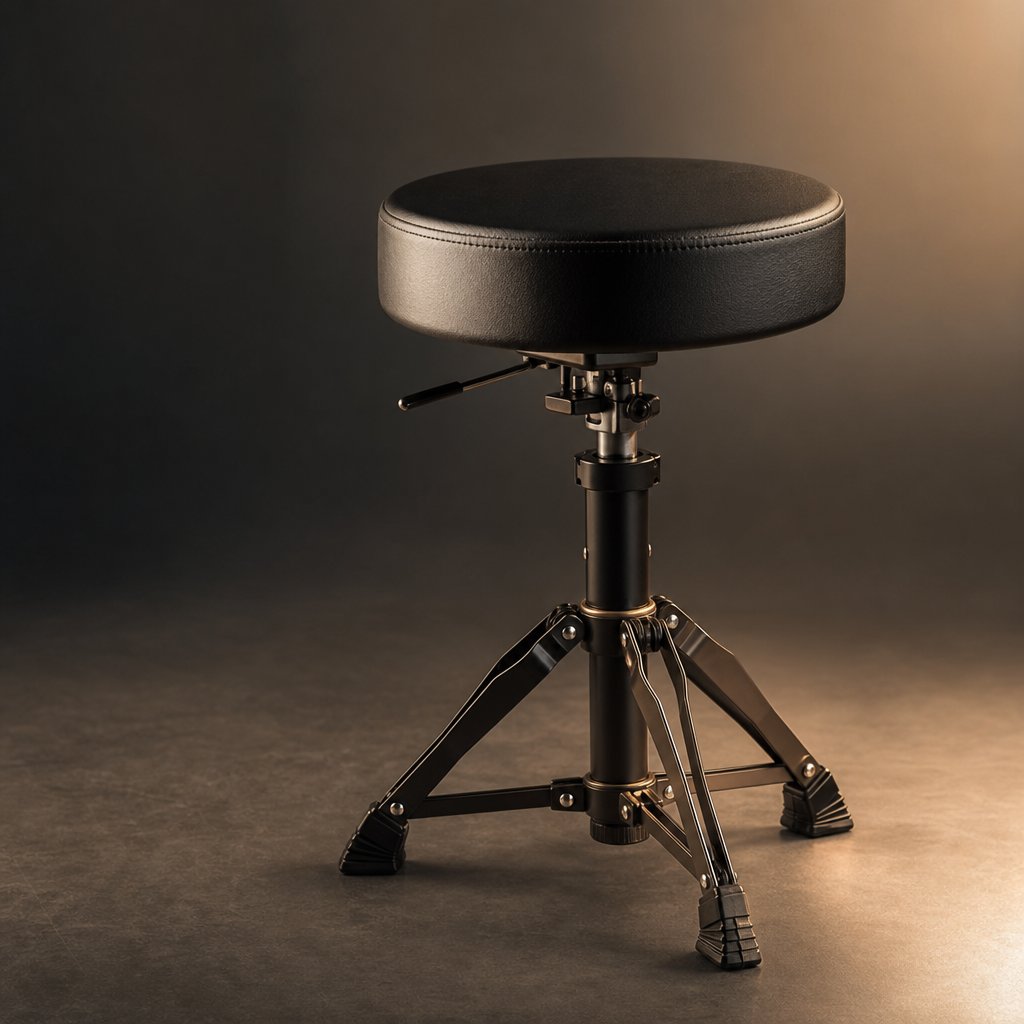
Tama
Tama 1st Chair Round Rider HT741B
Best price-to-quality ratio. Working-drummer's daily driver.
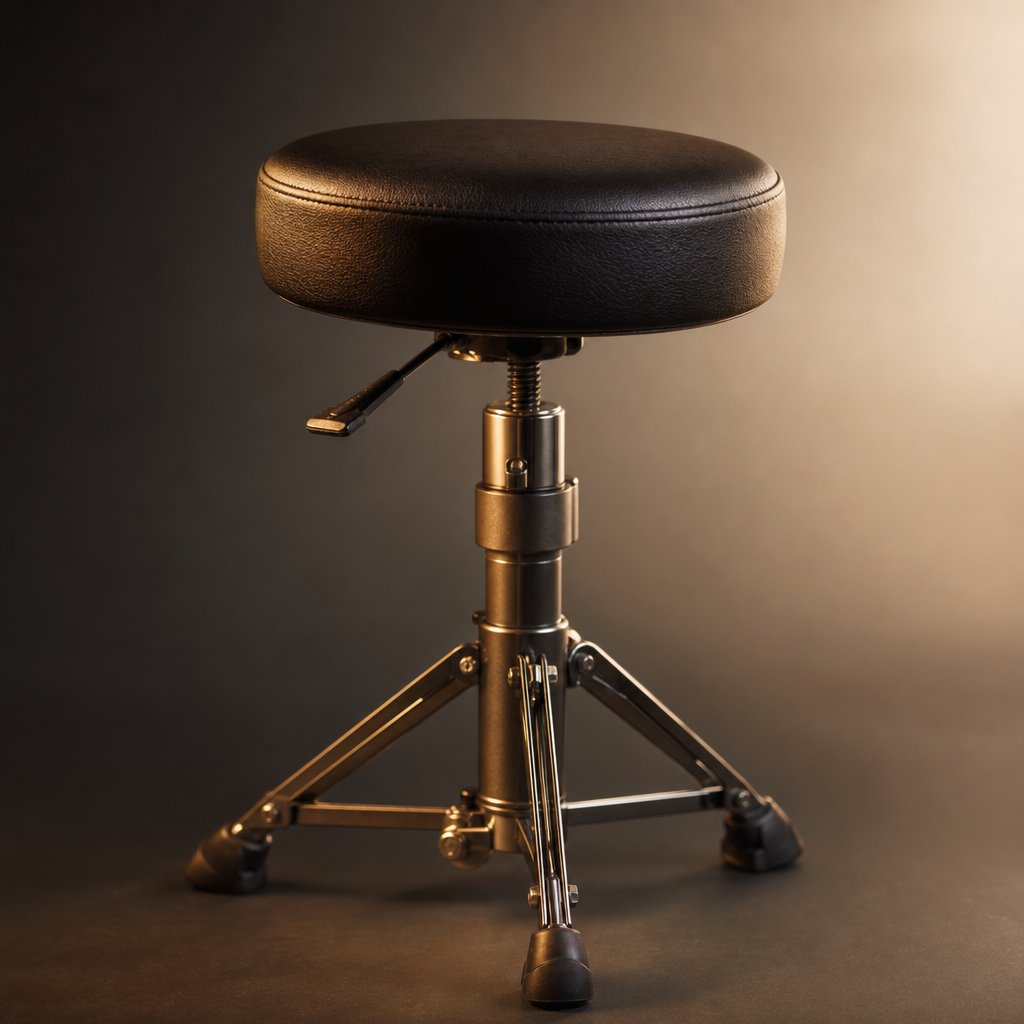
Roc-N-Soc
Roc-N-Soc Nitro
Hydraulic adjustment. Saddle seat. The drummer's ergonomic favourite.
All picks, side by side
Specs, prices, and verdict — side by side
| Product | Rating | Key spec | Price | Buy |
|---|---|---|---|---|
| Expert pick Drum Workshop DW 9100M Round Top | ADJUSTABLE 19"–25" | Around $429 | Check price → | |
| Roc-N-Soc Roc-N-Soc Nitro | ADJUSTABLE 18"–24" (gas-shock) | Around $279 | Check price → | |
| Tama Tama 1st Chair Round Rider HT741B | ADJUSTABLE 19"–25" | Around $189 | Check price → |
In detail
Why each pick made the list
Expert pick · Best Overall
Drum Workshop
DW 9100M Round Top
- ADJUSTABLE 19"–25"
- PADDING 5" memory foam
- BASE DW Tripod with stop-locks
- MAX LOAD 300 lb
The DW 9100M is the throne that touring drummers eventually buy after wearing out two cheaper alternatives. The 5-inch memory-foam top is the most comfortable in the category — the difference is genuinely noticeable after a 4-hour session. The tripod base has stop-locks at every height, which eliminates the slow-sink problem that plagues hydraulic thrones over time.
$429 is significant for a piece of hardware that doesn't make any sound, but the throne is the single component that touches your body for every minute you play. The compounded ergonomic benefit over a 20-year career justifies the spend.
Pros
- Memory-foam top is the most comfortable in the category
- Stop-locks on the tripod base eliminate the slow sink problem
- User-replaceable seat top extends lifespan indefinitely
Cons
- $429 is significant for a throne
- Memory foam compresses faster in hot rehearsal rooms
Roc-N-Soc
Roc-N-Soc Nitro
- ADJUSTABLE 18"–24" (gas-shock)
- PADDING 3" foam saddle
- BASE Hydraulic + tripod
- MAX LOAD 300 lb
The Nitro's gas-shock height adjustment is genuinely the smoothest mechanism on the market — you grip the seat, twist, and find your height in seconds rather than fiddling with stop-pins or threaded bolts. The saddle seat aligns the hips for better double-pedal technique; drummers who switch from a round-top often report immediate improvement in pedal control.
The hydraulic shock is one more component that can wear out, and after 5-7 years of heavy use you may need to send it back for a refurb. Roc-N-Soc handles this professionally; budget $80-120 if it ever happens.
Pros
- Gas-shock height adjustment is the smoothest on the market
- Saddle seat aligns hips for better double-pedal technique
- Smaller footprint than the DW 9100M for crowded stages
Cons
- Saddle seat takes a session to adjust to if you've used round-top thrones
- Hydraulic shock is one more component that can wear out
Tama
Tama 1st Chair Round Rider HT741B
- ADJUSTABLE 19"–25"
- PADDING 4" memory foam
- BASE Heavy-duty tripod
- MAX LOAD 260 lb
The HT741B is the working-drummer's daily driver — not as plush as the DW, not as ergonomic as the Roc-N-Soc, but at $189 it does 80% of what either of those does at half the price. The 4-inch memory-foam top is real memory foam, not the dense polyurethane some budget thrones use; the tripod base is heavy-duty enough that you won't feel it shift mid-session.
The 260-lb max load is lower than the pro-tier alternatives. For a 200-lb drummer this is fine; for heavier players or anyone who plans to gig in heavy boots, look at the DW.
Pros
- $189 for a memory-foam top with the same height range as the DW
- Reliable tripod base, no slow sink
- Replaceable seat top means lifespan is not capped by foam wear
Cons
- Foam noticeably less premium than the DW 9100M
- 260 lb max load is lower than the pro-tier alternatives
Frequently asked
Drum throne questions, answered.
What is a drum throne?
Drum throne vs drum stool — what's the difference?
How much should I spend on a drum throne?
Round top vs saddle seat — which is right for me?
What height should my drum throne be?
Do I need hydraulic adjustment?
How do I set up my drum throne for back pain?
How long should a drum throne last?
Setup
How to set up your throne in five minutes
-
Set the height first
Sit on the throne with both feet flat on the floor (no pedal). Your thighs should angle slightly downward from hip to knee — not flat, not angled up. If thighs are angled up, the throne is too low; the lower back will compress under the load. Use the calculator above this section to dial in the right starting range based on your inseam.
-
Position the throne relative to the kick pedal
Sit and rest your kicking foot on the kick pedal. Your knee should sit slightly behind the heel (not directly above, not in front). The throne should be far enough from the pedal that the kicking leg can pivot at the ankle without the knee floating up. Most drummers position the throne 4–6 inches behind the kick drum.
-
Lock the height and the spread
Tighten the seat-post lock fully so the throne can’t drop mid-session. Set the tripod legs to their widest stable spread — a wider base resists kick-pedal force better than a narrow one. Heavy drummers and double-pedal players especially benefit from full leg spread.
-
Adjust posture, not the throne
Once the throne is set, sit on the sit-bones (the bony ridges at the base of the pelvis), not on the tailbone. A neutral spine, shoulders relaxed, head balanced over the spine. If posture feels effortful at the right throne height, the throne is fine and your posture is the variable to fix — not the other way around.