Section
Drums & Gear
Thrones, pads, and the supporting cast that turns a kit into something playable.
The drum kit gets the catalogue photos, but the throne, the pads, and the accessories are what make eight-hour studio days possible. Buyer's guides for the gear nobody else writes about properly.
- 8 buyer's guides
- 24 products ranked
- 1 free calculator
Trending · Buyer's guide
Best Drum Thrones
The seat you sit on for 8,000 hours of practice and 500 gigs. Three thrones ranked, plus a free Throne Height Calculator that matches you to the right one.
Read the guide →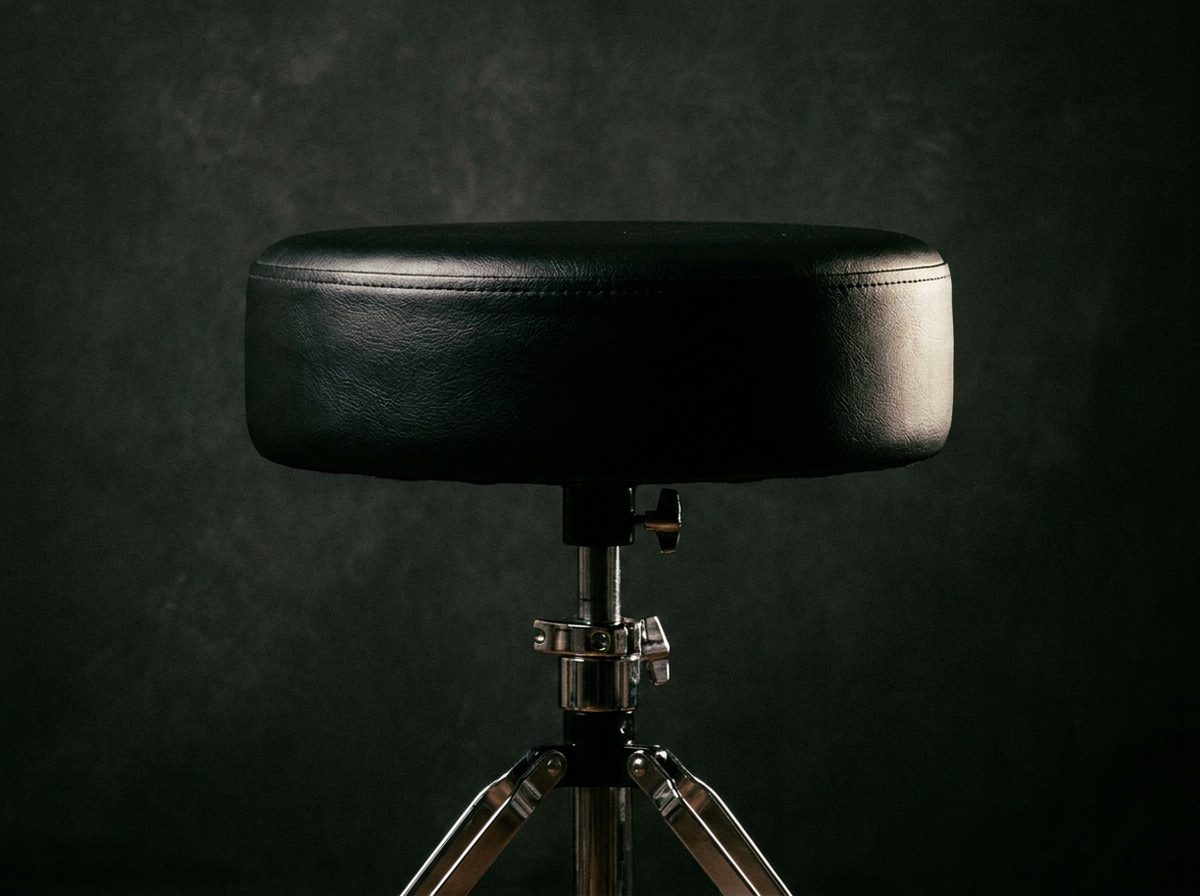
More from this section
Every article in this section
Buyer's guide
Best Drum Pads
Practice pads, electronic sample pads, and knee pads — three categories, ranked by what they're actually for.
Read →Buyer's guide
Best Electronic Drum Sets
Three e-kits ranked across budget, mid-tier, and pro-studio price points. Mesh feel, real triggering, and which one fits your room.
Read →Buyer's guide
Best Drum Sticks
5A, 7A, 5B — three sticks ranked across genre and durability. The default, the jazz pick, and the rock pick.
Read →Buyer's guide
Best Double Bass Pedals
Three double pedals ranked across drive types — chain, dual-chain true-pitch, and direct drive. Picked by tempo, genre, and gig length.
Read →Buyer's guide
Best Drum Heads
Snare batter, tom batter, kick batter — the reference heads producers default to and the working drummers actually buy.
Read →Buyer's guide
Best Drum Mics
Three microphones that account for ~80% of recorded drum tracks. Snare, kick, and clip-on tom solutions.
Read →Buyer's guide
How Much Does a Drum Set Cost?
Realistic price ranges from a $300 first kit to a $5,000 studio rig, plus a calculator that builds yours to spec.
Read →The hierarchy
How drum gear actually breaks down
A complete drum-gear setup splits into four layers, and the order in which you upgrade matters more than the brands you pick. Layer one is the throne, sticks, and ear protection — the gear that touches your body for hours and silently determines whether you can practice productively. Layer two is the kit itself: shells, hardware, and pedals. Layer three is the cymbals, which are usually a separate budget from the kit and which most working drummers swap more often than the shells. Layer four is the recording and monitoring gear: heads, mics, IEMs or isolation headphones. Skip layer one and the rest of the kit underperforms; we cover it here on purpose.
Across all four layers, the working-drummer market consolidates around a small set of brands for predictable reasons. Tama, DW, Pearl, and Yamaha own the shell market; Tama Iron Cobra and DW 9000 dominate the pedal market; Vic Firth, Vater, and Promark account for nearly all professional stick sales; Roc-N-Soc, DW 9100M, and Tama HT741B are the three thrones every gigging drummer ends up choosing between. The brand consolidation isn’t laziness on the part of pros — it reflects what survives 500 gigs and 8,000 practice hours.
First-kit vs upgrade kit
Build a first kit for under $1,500, a forever kit for $4,000
A first complete drum-kit setup — shells, hardware, cymbals, throne, sticks, pedal, kick mic, snare mic, headphones, ear protection — can be built for $1,200–$1,500 if you’re patient and pick the right entry-level lines. The kit is usually the cheapest part of that budget; the throne, cymbals, and monitoring gear are where the money actually goes. A “forever” setup that won’t need replacing for a decade is closer to $4,000–$5,000, and most of the upgrade premium goes into the cymbals, the throne, and the snare drum — not the rest of the shells.
Our cost-of-a-drum-set guide breaks down the full line-item budget tier by tier, and the embedded calculator builds a custom estimate from your specific use case. The pieces that justify a price jump (cymbals, throne, snare) are called out separately from the pieces where the entry-level option is genuinely fine (basic stick brand, kick mic, hi-hat stand).
What we don't cover here
Why some categories live elsewhere on the site
Two big gear categories live in their own sections rather than under Drums & Gear because they have enough sub-decisions to need their own hubs. Cymbals have a complete cymbals hub covering brand rankings (Zildjian, Sabian, Meinl, Paiste), genre-specific picks, and a free pack-builder tool. Headphones, IEMs, and ear protection live under Headphones & Monitors with separate guides for studio isolation, live IEMs, and musician’s earplugs. The split makes the navigation cleaner; everything else — thrones, pads, sticks, heads, mics, pedals, electronic kits — lives here.