Buyer's guide
Best Double Bass Pedals
A double pedal is the single most foot-fatiguing piece of hardware on the kit, and the wrong choice will end a set fifteen minutes before the encore. Three pedals ranked across drive types — chain, dual-chain true-pitch, and direct — and across the genres each was actually engineered for. Buy by your right-foot tempo and your gig length, not by what's on the magazine cover this month.

Our three picks
The shortlist, if you’re in a hurry
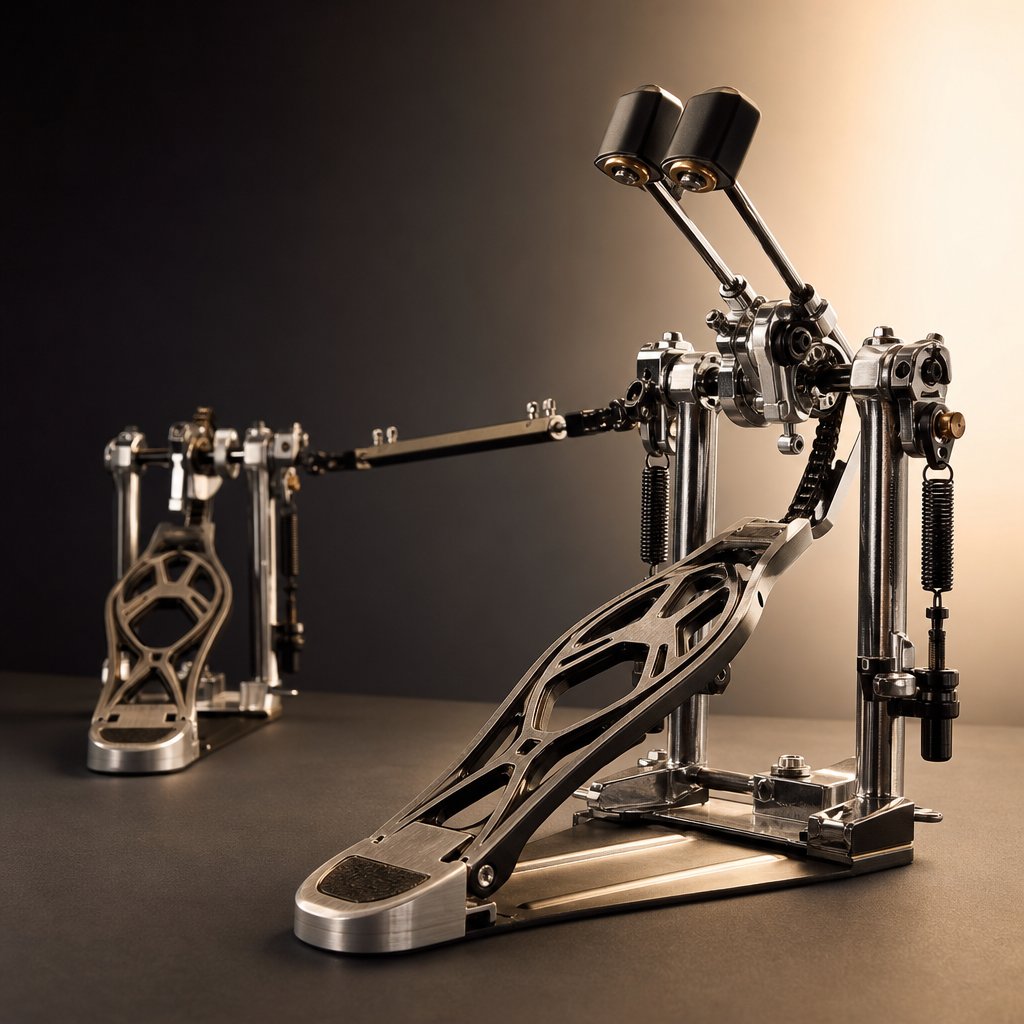
Tama
Tama Iron Cobra Power Glide HP900PWN
The double pedal most working metal drummers actually own. Heavy on the foot, but the action is bombproof.
Pearl
Pearl P-3002D Eliminator Demon Drive
The speed metal pedal. Direct drive means every foot motion translates 1:1 into beater motion — extreme tempos become possible.
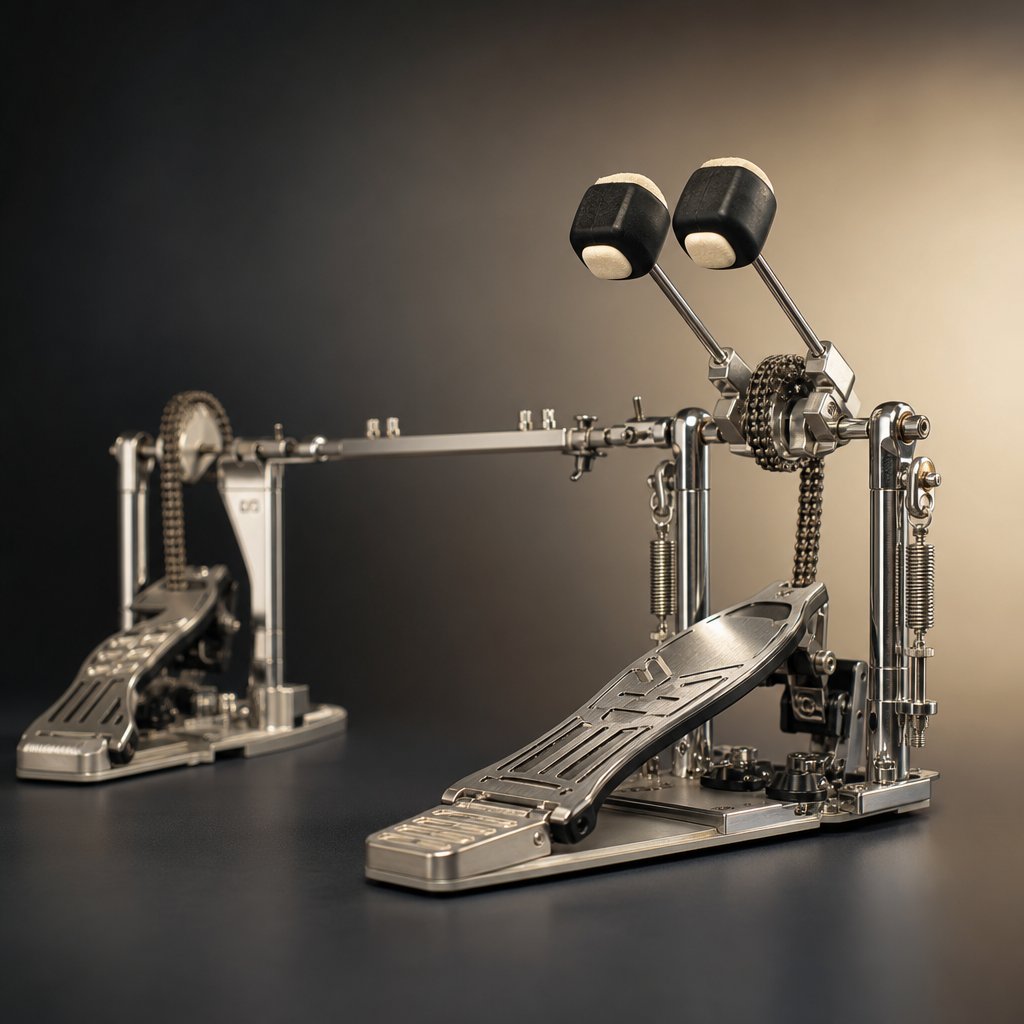
Drum Workshop
DW 9002 Double Pedal
The studio standard. Tunable spring, stable linkage, the smoothest action in the high tier.
All picks, side by side
Specs, prices, and verdict — side by side
| Product | Rating | Key spec | Price | Buy |
|---|---|---|---|---|
| Expert pick Tama Tama Iron Cobra Power Glide HP900PWN | DRIVE Power Glide cam (offset, more rotational power) | Around $549 | Check price → | |
| Drum Workshop DW 9002 Double Pedal | DRIVE Dual-chain, true-pitch beater system | Around $799 | Check price → | |
| Pearl Pearl P-3002D Eliminator Demon Drive | DRIVE Direct drive (no chain or strap, fully rigid) | Around $599 | Check price → |
In detail
Why each pick made the list
Expert pick · Best Overall
Tama
Tama Iron Cobra Power Glide HP900PWN
- DRIVE Power Glide cam (offset, more rotational power)
- BEATER Para-Cobra dual-sided felt/hard-plastic
- LINKAGE Cobra Coil tension spring system
- BUILD Speed-Ring base plate, lightning ball-bearing hinge
The Iron Cobra HP900PWN is the double pedal you see on more touring drummer's hardware risers than any other model, and the reason is straightforward: it does not break. The Speed-Ring base plate, the Cobra Coil tension spring, and the lightning ball-bearing hinge are all overengineered for the actual loads they see, which means a touring drummer can hand the kit off to a backline tech for ten years and never have to think about pedal service.
The Power Glide cam is the other reason. The cam is offset from the rotational axis, which means as the beater accelerates, the leverage increases — you get more rotational power into the head than a true-pitch cam delivers at the same foot velocity. For metal drummers playing 220+ BPM doubles, that translates into bass tones that actually punch through the mix instead of getting buried under cymbals. The trade is weight: this is a heavy pedal, and the foot fatigue at the end of a 90-minute set is real.
Pros
- Power Glide cam delivers rotational force harder than most direct-drive pedals — the kick comes through the mix
- The whole assembly is overengineered: 10+ years of hard touring use is realistic before any service is needed
- Para-Cobra dual-sided beater means you can flip from soft attack to hard click without changing pedals between songs
Cons
- Heavier on the foot than the DW 9002 — fatigue arrives faster on hour-long metal sets
- Linkage is the longest in the category — cramped stages need careful pedal placement
Drum Workshop
DW 9002 Double Pedal
- DRIVE Dual-chain, true-pitch beater system
- BEATER DW two-way (felt/plastic)
- LINKAGE Floating Tri-Pivot Toe Clamp + Universal Joint
- BUILD Aluminum base plate with non-slip rubber pad
The DW 9002 is the pedal session drummers reach for when the producer wants the kick to disappear into the mix — meaning, become so tight and consistent that you stop hearing it as a separate element and start hearing it as the rhythmic foundation. The dual-chain drive is true-pitch (the cam matches the beater's natural rotational arc), the spring tension is independently tunable, and the Tri-Pivot Toe Clamp is the only foot-clamp design in the high tier that doesn't drift over the course of a long take.
$799 buys the smoothest action in the category. Drummers switching to the 9002 from Iron Cobras consistently report that fatigue arrives later in the set — not because the spring is lighter, but because the pedal removes resistance noise that you weren't aware was there. The downside is that smoothness is the wrong feel for some genres. Metal drummers who like the explosive feel of the Iron Cobra often find the 9002 too refined.
Pros
- Tri-Pivot Toe Clamp keeps the slave pedal genuinely planted — no creep over the course of a set
- Spring tension and beater angle are independently adjustable — you can dial in any feel
- The pedal action is the smoothest in the high tier — drummers used to it report immediate fatigue reduction switching from Iron Cobras
Cons
- $799 is the most expensive non-boutique double pedal on the market
- Smoother action means less explosive feel than the Iron Cobra — metal drummers may prefer the Tama
Pearl
Pearl P-3002D Eliminator Demon Drive
- DRIVE Direct drive (no chain or strap, fully rigid)
- BEATER Demon Drive interchangeable beater
- LINKAGE Ninja Bearing Hinge + Quick-Release Linkage
- BUILD Roller bearings throughout, glide pad on linkage
The Demon Drive is the only direct-drive pedal in the working-pro tier. Direct drive means there's no chain, no strap, no flex element between your foot and the beater — the linkage is a solid metal arm. The result is a pedal whose response is instantaneous in a way chain-drive pedals physically can't match. For drummers playing blast beats, gravity rolls, or any technique that requires extreme speed at the millisecond level, the Demon Drive's response curve enables tempos that aren't reachable on the Iron Cobra or the DW 9002.
The catch is that direct drive transmits every foot tremor straight to the beater. Sloppy technique becomes very audible — a chain pedal smooths out small inaccuracies, the Demon Drive amplifies them. Drummers switching to direct drive typically need a few weeks to adapt, and heel-toe doubles work differently. Buy this pedal because you've decided you need direct drive, not as a general upgrade.
Pros
- Direct drive eliminates chain slack — the response is instant in a way chain pedals can't match
- Roller bearings throughout the pivot points reduce friction to near-zero
- Quick-Release linkage breaks down for transport in seconds
Cons
- Direct drive transmits every foot tremor straight to the beater — sloppy technique becomes very audible
- Less forgiving than chain-drive pedals — heel-toe doubles work less naturally until you adapt your stroke
Frequently asked