Buyer's guide
Best Low Volume Cymbals
The neighbours have asked twice. The lease has the noise clause highlighted in yellow. You're not stopping practice — you're getting cymbals that still let you practice. Three low-volume packs ranked for stick feel, articulation, and how close they get to silent without killing the playing experience.

Our three picks
The shortlist, if you’re in a hurry
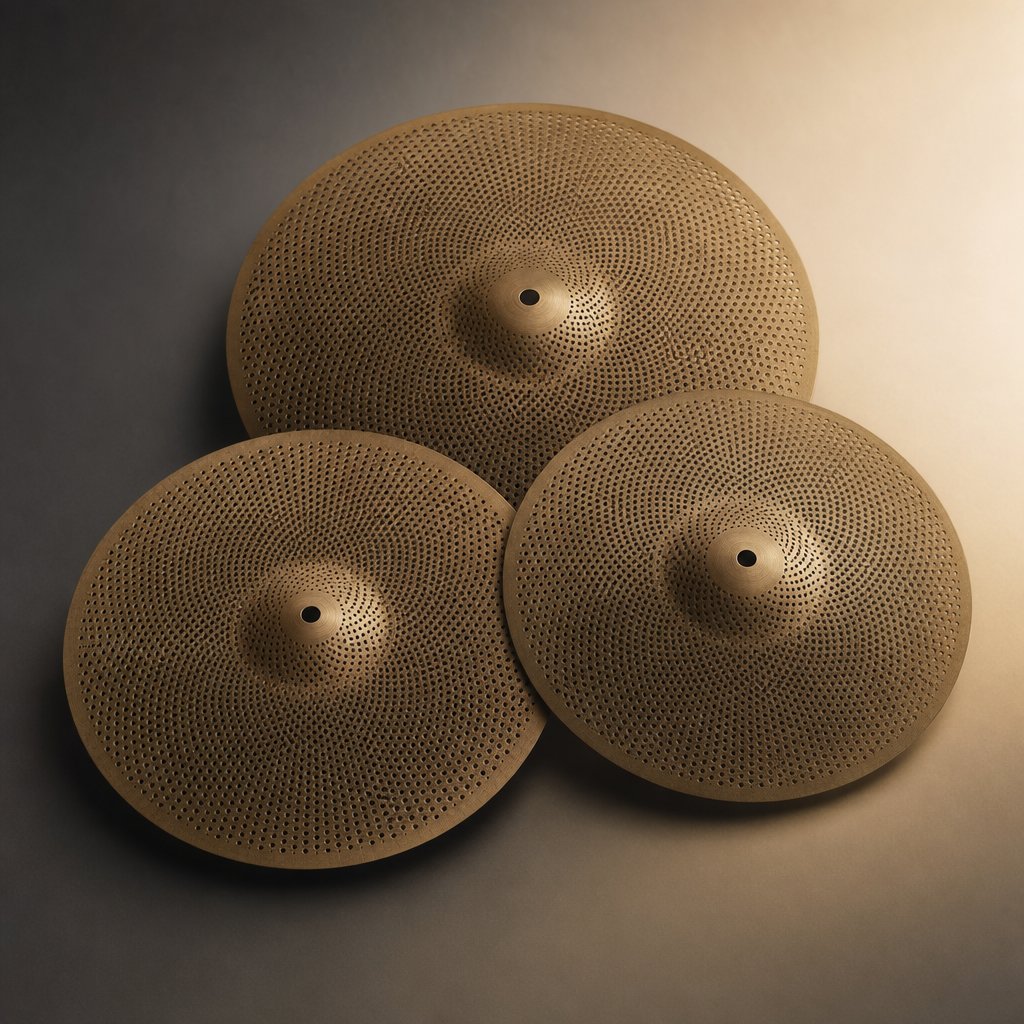
Zildjian
Zildjian L80 Low Volume Pack (14/16/18)
The category-defining low-volume pack. Realistic stick rebound, dry attack, neighbor-safe.
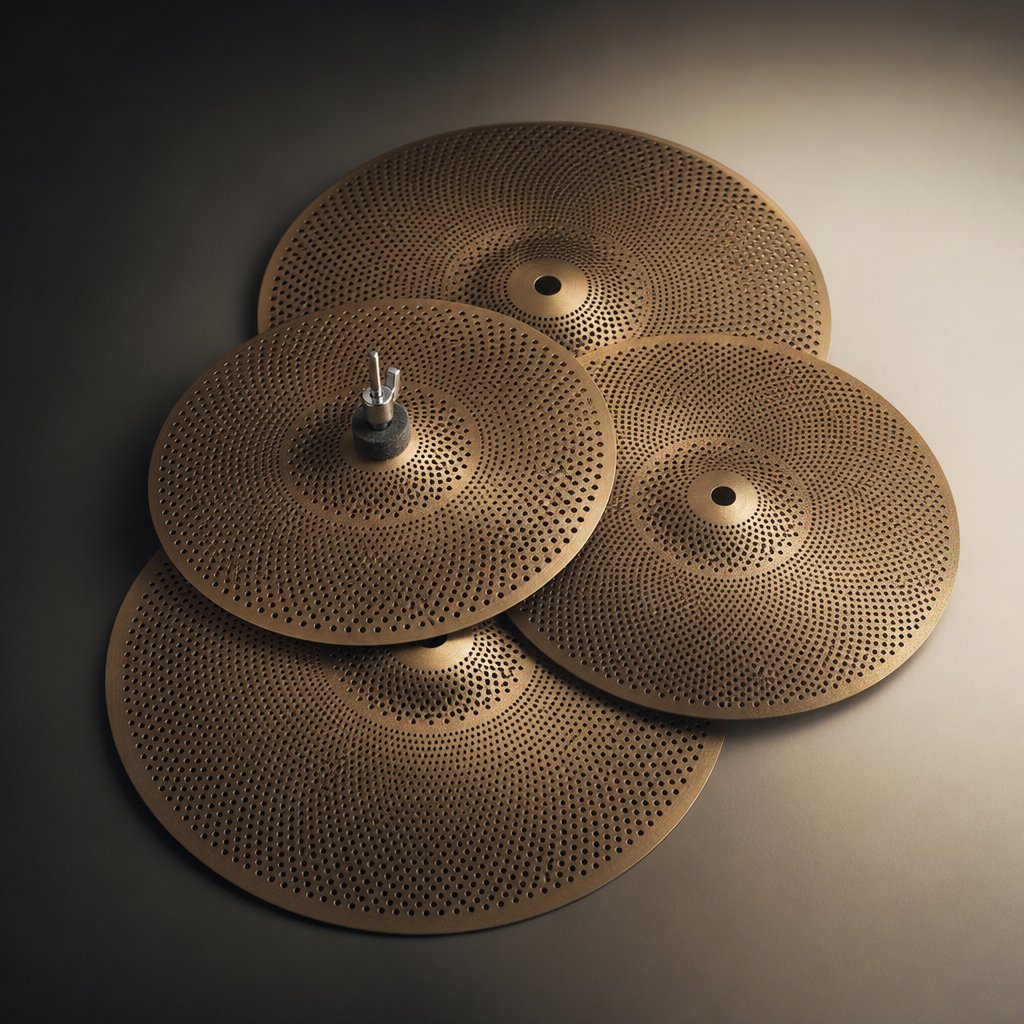
Meinl
Meinl HCS Practice Cymbal Set
Quietest of the three by a margin. Stick feel is more practice pad than cymbal — accept the trade for $189.
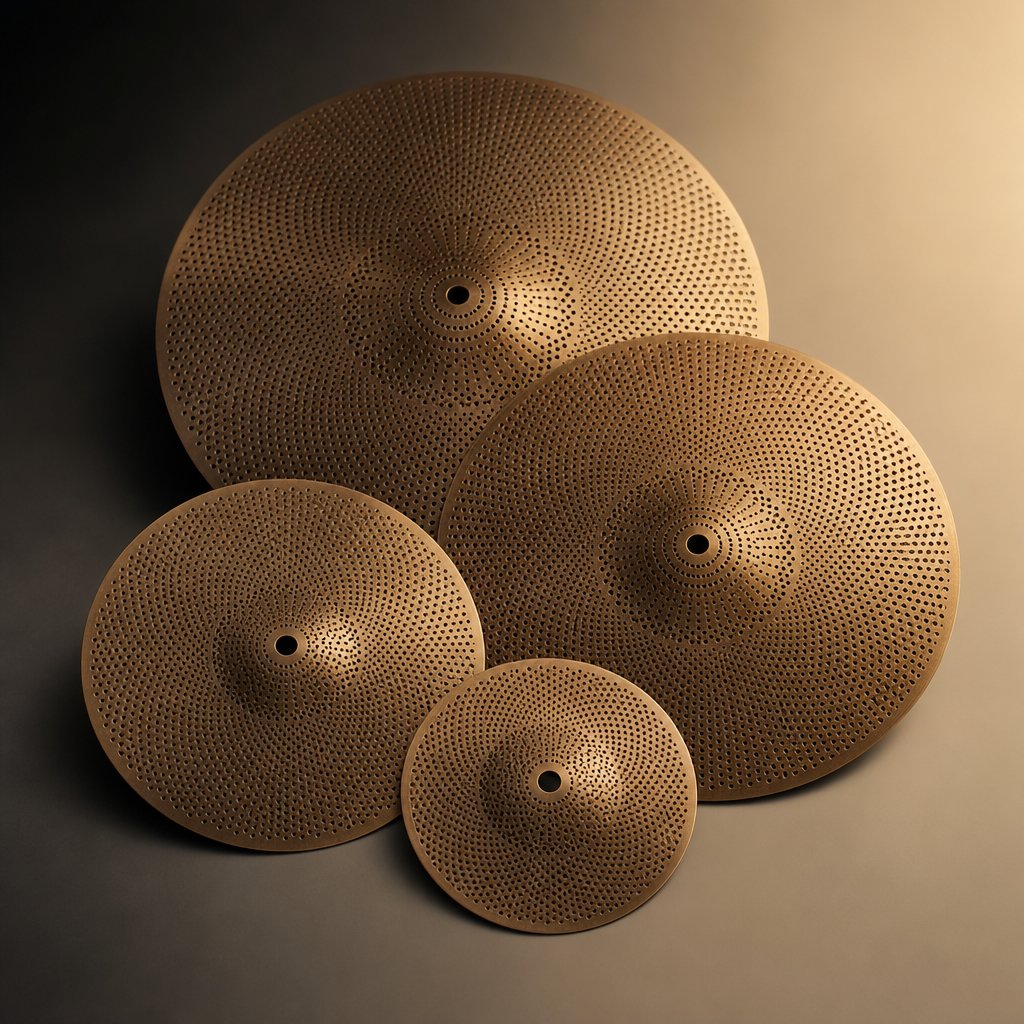
Sabian
Sabian Quiet Tone Practice Cymbal Pack
$60 cheaper than the L80 with comparable volume reduction. Stick feel is the trade-off.
All picks, side by side
Specs, prices, and verdict — side by side
| Product | Rating | Key spec | Price | Buy |
|---|---|---|---|---|
| Expert pick Zildjian Zildjian L80 Low Volume Pack (14/16/18) | REDUCTION ~80% (-20 dB) | Around $329 | Check price → | |
| Sabian Sabian Quiet Tone Practice Cymbal Pack | REDUCTION ~80% (-20 dB) | Around $269 | Check price → | |
| Meinl Meinl HCS Practice Cymbal Set | REDUCTION ~85% (-22 dB) | Around $189 | Check price → |
In detail
Why each pick made the list
Expert pick · Best Overall
Zildjian
Zildjian L80 Low Volume Pack (14/16/18)
- REDUCTION ~80% (-20 dB)
- MATERIAL Drilled bronze alloy
- PACK 14" Hi-hats, 16" Crash, 18" Crash/Ride
- FEEL Closest to standard cymbals
The L80 is the pack to buy if your low-volume cymbals also need to feel like cymbals. Zildjian engineered the perforation pattern to keep the bronze flexing on stick impact — the result is rebound that’s closer to standard cymbals than anything else in the category. Hi-hats open and close like real hi-hats; the chick from a clean foot-close is intact.
Volume drops by roughly 20 dB versus standard cymbals — you’ll go from “the upstairs neighbour will absolutely call” to “the upstairs neighbour will probably tolerate it.” Not silent. The stick still hits bronze and the bronze still rings briefly. If your goal is total quiet, look at the Meinl HCS pack instead. If your goal is to practise without retraining your hands for the gig, the L80 is the only correct choice.
Pros
- Stick rebound feels closest to standard cymbals in the category
- Hi-hats actually open and close like real hi-hats — most low-volume hats don't
- Available in pack sizes that map to a real 4-piece kit
Cons
- $329 for the pack is more than some entry-level real cymbal sets
- Not silent — still produces stick-on-bronze attack neighbours can hear
Sabian
Sabian Quiet Tone Practice Cymbal Pack
- REDUCTION ~80% (-20 dB)
- MATERIAL Anodised brass with perforated holes
- PACK 14" Hi-hats, 16" Crash, 18" Ride
- FEEL Slightly stiffer than L80
The Quiet Tone delivers the same ~20 dB reduction as the L80 for $60 less, with one meaningful trade-off: the stick feel is stiffer. Sabian uses an anodised brass body with a different perforation pattern, and the result is a cymbal that rebounds more like a practice pad than a real instrument. Drummers transitioning from electronic kits won’t notice; drummers used to acoustic cymbals will.
The hi-hats are the weakest part of the set — the open/closed articulation is muddier than the L80’s. For a practice rig where dynamics matter (jazz, anything with brushes), the Zildjian wins. For a price-conscious apartment kit where the goal is rudiment work and groove practice at low volume, the Quiet Tone is the smart spend.
Pros
- $60 cheaper than the L80 pack with the same dB reduction
- Anodised finish is more visually similar to real cymbals than the L80's industrial perforations
- Brass construction is lighter — easier on stand wear over years of setup/teardown
Cons
- Stick rebound is noticeably stiffer than the L80 — closer to a practice pad than a real cymbal
- Hi-hats don't articulate the open/closed dynamic as cleanly as the L80
Meinl
Meinl HCS Practice Cymbal Set
- REDUCTION ~85% (-22 dB)
- MATERIAL Rubber-coated metal core
- PACK 14" Hi-hats, 16" Crash, 20" Ride
- FEEL Practice-pad-like, very dampened
The HCS Practice cymbals aren’t really cymbals — they’re rubber-coated metal cores designed for the absolute quietest practice possible. Volume reduction is around 85%, the highest in this comparison. If you’ve been told by a property manager that no further drumming-related noise will be tolerated, this is the pack that keeps you playing.
The trade is feel. Stick rebound is dampened to the point that these read as practice pads rather than instruments. Use them as a supplement to a proper kit, not a replacement — spend two months only on these and you’ll need a session to recalibrate when you sit at a real ride. At $189, that’s a forgivable cost for a tool that lets you keep your apartment.
Pros
- Quietest pack on the market — closer to silent than the L80 or Quiet Tone
- $189 makes this the obvious starting point before committing to a $300+ pack
- Includes a 20" ride — the L80 pack tops out at 18"
Cons
- Stick rebound is significantly different from real cymbals — bad muscle memory if it's your only practice tool
- Tone is essentially nonexistent — these are practice timers, not musical instruments
Frequently asked